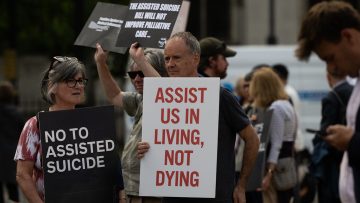
The Catholic Medical Association (CMA) is dismayed by the re-introduction of the flawed Terminally Ill Adults (End of Life) Bill and by the possibility of it being pushed through the Lords using the Parliament Acts. The House of Commons failed to amend and make it safer, which meant it ran out of time in the Lords, who had been left with the impossible task of trying to improve it. The Commons Committee stage had been weighted heavily to supporters of the bill and was highly selective in the evidence they heard, excluding various organisations. CMA members who followed the debate were shocked at the way so many reasonable clarifications and amendments were rejected.
The CMA both opposes the principle of legalising assisted suicide and specifically stands against this bill. It does this alongside professional medical bodies including the Royal Colleges of Physicians, Pathologists and Psychiatrists, the Association for Palliative Medicine, and the British Geriatrics Society. The British Medical Association, too, voted recently to demand many safeguards that do not appear in the bill. Their new policy includes that the law makes clear that assisted dying is not a medical treatment, that the BMA requires an opt-in model for all providers and that resident (junior) doctors are to be specifically excluded from formal involvement in assisted dying.
Medical opinion has changed. The bill does not allow hospices, nursing or care homes to opt out of providing assisted suicide. Should the bill go through, this will likely lead to loss of the services provided by many Catholic care and other organisations. Lord Stevens, a former CEO of NHS England warned in the Lords that the bill would encourage “self-coercion in the name of altruism” and lead the sick and elderly to choose assisted suicide “to protect the NHS.” Prof Nicola Ranger, from the Royal College of Nursing, painted the stark picture of the “first discussion” not taking place with a doctor, but with a nurse at 2am. It is easy to imagine the permanent NHS bed crisis pushing a nurse to persuade the sick or elderly in the early hours that “You are not for resus, and you are expected to die in the next 6 months. You have a right to an assisted death… would you like me to ask the doctors in the morning?”, explaining how it would save money for the family and for the NHS.
Public opinion has also changed. This May a major poll posed the question, “should the UK parliament prioritise fixing the NHS and improving palliative, social and end of life care before considering whether to introduce assisted suicide?” 60% overall agreed, compared to only 19% disagreeing and 23% who “didn’t know.” This is a dramatic change among a better-informed public.
That poll question mirrors Andy Burnham’s statement that “I take the view that for the debate (on the bill)… there’s something that needs to happen first. That is the fixing of the funding of palliative care and social care.” Labour MPs must act on this warning from their leader and not allow this awful bill to divert them from fixing hospice and social care provision plus the directly linked NHS corridor care crisis.
The CMA believes safeguards to protect vulnerable patients are of paramount importance. The recent dreadful scandals in maternity care prove the system cannot protect pregnant women and babies. How can we protect the sick, elderly, vulnerable and disabled from an NHS in crisis, desperate to clear beds, if assisted suicide is made legal?
This is a statement from the Catholic Medical Association. You can visit CMA’s website via this link.
Suggested parish newsletter text, resources such as A4 printable posters with QR codes and more can be found by visiting our dedicated section ‘Oppose Assisted Suicide’ on the Bishops’ Conference website.
You can also use this form to contact your MP to ask that they oppose assisted suicide on Friday, 11 September. Any issues with this form, please visit the Right to Life UK website.