Josephine Warren, Historic Churches Adviser, reflects on the importance of our Catholic heritage as we enter the age of AI.


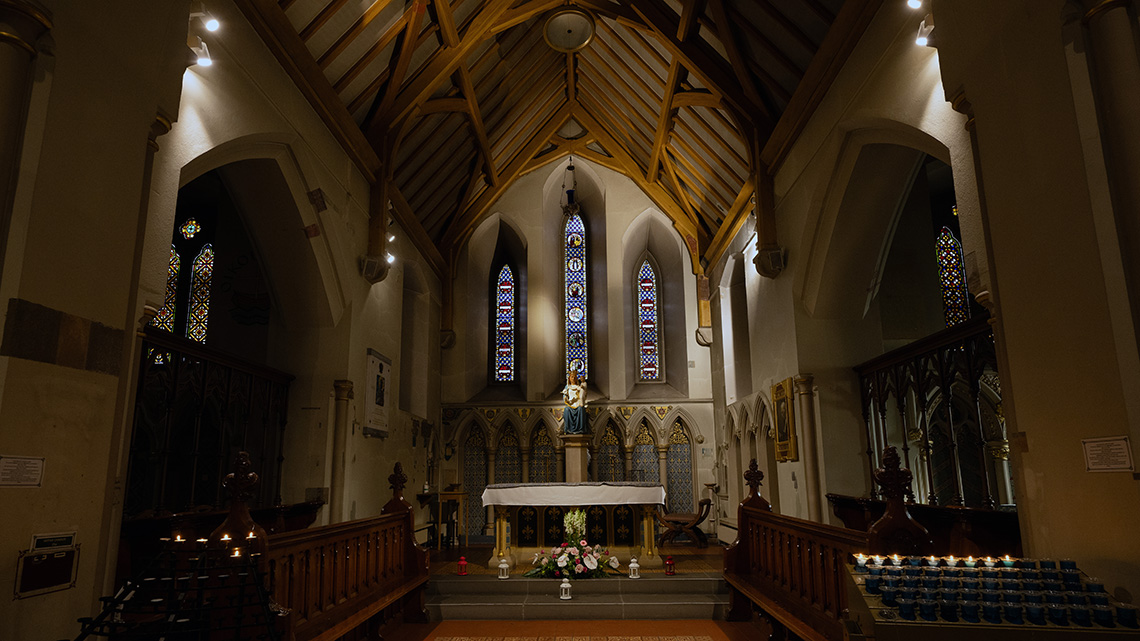
As we irrevocably move into a new technological age, it is more important than ever to reflect not only on the lessons of the past, but on the opportunities for real, in person engagement with our heritage and our faith that we find in our church buildings and the artwork inside them.
In Magnifica Humanitas, Pope Leo XIV reminds us that the rebuilding of Jerusalem happens through the combination of different people with different roles and skills – a model for societal cohesion and in this context, we can include architects, artists, craftspeople, conservators, and the many volunteers on which we rely so heavily to keep our parishes running. Heritage also influences the task ahead of us in deciding how to use AI; learning from our past in deciding how we can understand and begin to shape our future, for us, for our communities, and for the whole of creation.
Heritage offers a non-AI option. Largely, heritage crafts and historic buildings cannot be replicated or experienced through AI. It can imitate certain intellectual functions, but it cannot replace the artistry through which our historic churches, artworks and objects were and are created, or the embodied human experience and social history they contain. These things are by their nature not easily replicated through new technology. In remembering these and carrying them forward into the future, we make our lived experience ‘more’ human – something which Pope Leo encourages us to seek in our engagement with AI.
It probably goes without saying that restoration and repair of historic churches and the use of traditional crafts and artforms can cost significant sums of money, and indeed those working with historic churches continue to make the case for public funding for our buildings that embody so much of the heritage of art, architecture and design. The newly launched Places of Worship Renewal Fund, aims to put a total of £92 million into repairs of our listed places of worship of all faiths and denominations over the next few years, but this will only cover a fraction of the repair needs of these important historic places.
However, in discussing the history of the Catholic Social Teaching of the Church in Magnifica Humanitas, Pope Leo reminds us that money should not lead our decision making on these issues, and that dignity of the people who have created these special places should not be forgotten. By extension we should not forget our present-day creatives and craftspeople either, and that we need to work together in our communities to ‘improve and beautify the world’ (148). The beauty and shared heritage we find in our churches not an optional extra but in so many ways integral to our liturgies and understanding of our faith and has huge potential for evangelisation.
Many communities that care for historic churches are now exploring how they might restore and recreate the original design schemes and artworks within them, returning some of the original beauty where it has been lost over the years.
Salford Cathedral – designed by Matthew Hadfield of Weightman & Hadfield – has recently reopened after a huge restoration project, restoring some of the dazzling gothic revival splendour to the interior, and is sure to be a source of pride and inspiration for the congregation and wider community for generations to come.
The Restoring Pugin project at Nottingham Cathedral, funded by the National Lottery Heritage Fund, has seen a team of expert conservators from Cliveden Conservation uncover some of the original A.W.N. Pugin paint scheme, painstakingly scraping back sections of paintwork to reveal the designs underneath and restoring areas of the church to their former glory whist leaving ‘windows’ of original paint so that worshipers and visitors can see the actual historic paintwork alongside the new.
Pugin was the most prominent architect of the Gothic Revival movement in the 19th Century and was only 26 when he published ‘Contrasts’ – his manifesto for the architecture and the Gothic Revival; a return to the architectural styles (and social structures) of the Middle Ages. Pugin designing over 100 buildings, including the interiors of the Houses of Parliament, and many churches including the marvellous St Giles, Cheadle and St Chad’s Cathedral in Birmingham before his untimely death at the age of of 40. Slightly later, William Morris, key instigator and proponent of the Arts and Crafts movement, passionately rejected industrialisation and mass production, believing that it stripped art of its beauty and degraded the dignity of the workers, causing deep social harm. Pugin and Morris had some very strong opinions, and whilst not everyone would agree with all their views, we can draw a parallel with our own time as we move rapidly into the age of AI. Understanding the past can help inform our future. We must be careful to protect the dignity of artists, architects and craftspeople, and learn about and care for our heritage, ensuring it remains part of the living history of our faith, and our churches spaces where we connect the deeply human acts of craftsmanship with our desire for connection with God.
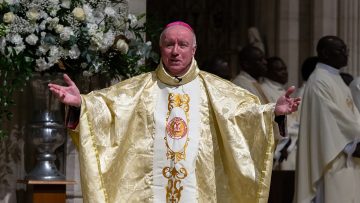
Bishop Philip Egan emphasised that many more people should come to know ‘the God who made them’.