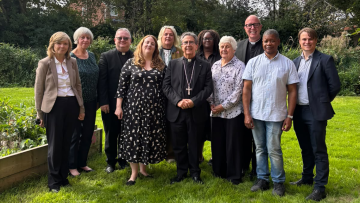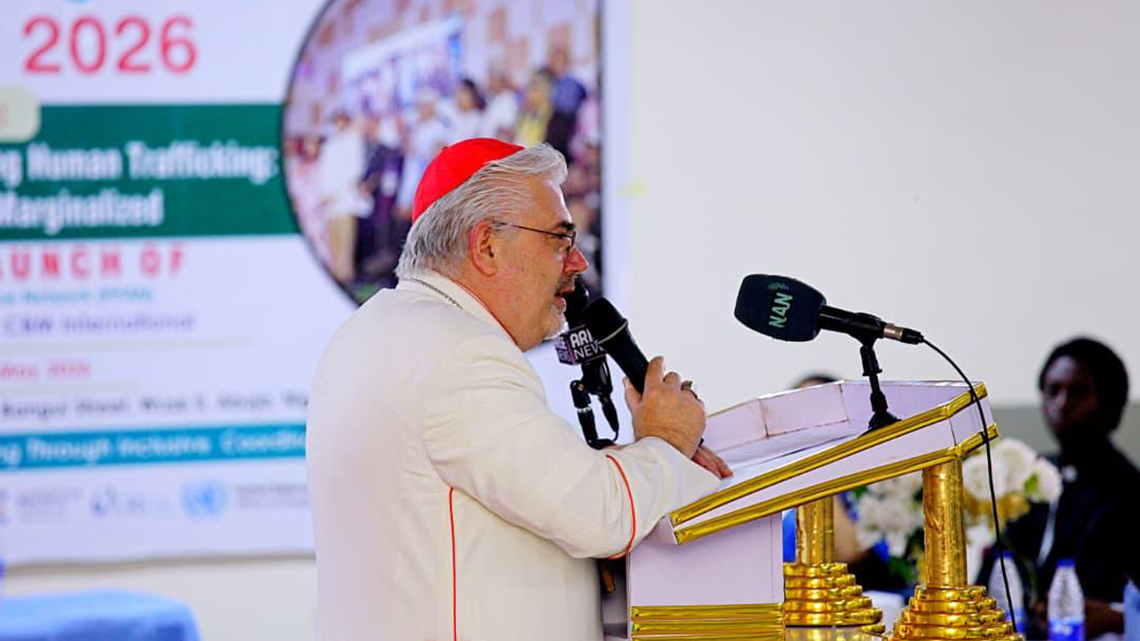
Bishops, government officials, UN agency representatives, civil society leaders, survivor advocates, and development partners gathered in Nigeria in May to examine the current challenges around human trafficking and modern slavery.
Meeting in the capital Abuja, delegates from across Africa and beyond were attending the inaugural summit of the Pathways to Freedom Africa Network (PFAN) from 19-20 May 2026. The theme for the conference, hosted by the Archdiocese of Abuja with support from Catholic Bishops’ Conferences of Nigeria and England and Wales, was Inclusive Strategies for Ending Human Trafficking: Reaching the Most Marginalised.
Building on the momentum generated since the inaugural pan-African anti-human trafficking conference in 2018, Catholic institutions and partners across the continent have strengthened the Church/State collaboration, enhanced survivor support mechanisms, and expanded awareness-raising and empowerment initiatives.
The aim of this event was to hold a truly inclusive, continentally-anchored conference in Africa to consolidate these gains and articulate clear, actionable priorities for the next phase of engagement.
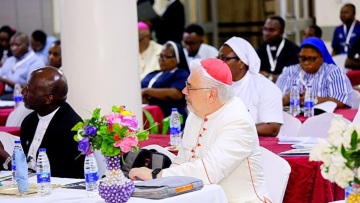
The Holy See was well represented at the conference – a significant indicator of Pope Leo’s ongoing commitment to combatting human trafficking. This cause was, of course, so close to the heart of his predecessor Pope Francis. Cardinal Fabio Baggio, Undersecretary of the Vatican’s Dicastery for Promoting Integral Human Development addressed the delegates to explain the work of his office in tackling the scourge of human trafficking and modern slavery. Cardinal Baggio leads work in the Migrants and Refugees Section of the Dicastery.
Speaking to us from Abuja for a podcast interview, he explained that, “from the first sentences I can recall from the terrace, Pope Leo strongly picked up from where Pope Francis left off, which was in fighting for the most vulnerable, fighting for human rights, fighting for the enslaved, fighting for the voiceless and for those who are in need of support from the Church. The survivors and victims of human trafficking are, of course, among them.”
Cardinal Baggio stressed that his office had a strong desire to work collaboratively in this field:
“We spent a lot of time in the first two years listening to the voices of those who are working in the field dealing concretely with the fight against trafficking, particularly Talitha Kum, the Sisters, the Santa Marta group and many other workers within the Catholic Church.”
“Unfortunately today,” Cardinal Baggio explained, “traffickers are quicker and smarter… this is why there is a need for greater effort from our side in order to strengthen new coalitions, new alliances, and new networks. What we have as the Catholic Church, as men and women of goodwill, is that we are everywhere in the world. We are many, but we have to join forces in order to reach the result that I would like to reach – the conversion of traffickers.”
Reflecting on how to practically achieve this goal, Cardinal Baggio suggested that the conference in Abuja was a positive example of how to take things forward:
“What is happening here is important, with the connection between the local African churches together with the churches of Europe and the UK. Today, modern slavery is a scourge, a wound to humanity. We have slaves, modern slaves, everywhere. This is why we should be raising awareness together. Connecting churches bilaterally, internationally – that is what will make us stronger.
“We have to start with the awareness and sensitivity of the pastors, of bishops, priests, religious men and women, but then go directly to our community so that everybody can be engaged.”
Cardinal Baggio urged people to be aware of the problem generated by consumer demand:
“I can recall Pope Francis raising the big question about the ‘demand’ side. If I want to buy a product cheaper and cheaper, the only thing that can be done is to reduce the cost of labour, meaning slavery, meaning making people work for nothing.”
He also raised the various forms of sexual exploitation as another danger that deserves greater awareness:
“It can be cyber or physical slavery; it can be human trafficking. This is something that we have to reflect upon. It’s a question of culture, it’s a question of understanding that people are being transformed into commodities to be used and abused any time.”
As well as reporting, investigating and denouncing modern slavery and human trafficking, the Cardinal also suggested that we can combat this scourge through prayer and faith.
“We have a lot of people of goodwill – men and women, who are joining this fight – but we have extra energy which is coming from the Holy Spirit, the grace that we have received as baptised people, and a mission that we have received in our baptism, which is pushing us to love the least, the lost, and the last. Among them, we will be able to find a lot of victims and survivors of human trafficking. It is part of our charity, not in the sense of a donation of money, the love that we would like to manifest, to make concrete, to go and to brothers and sisters in the faith.”