We Dare to Ask - Session Two. 'And I will establish my covenant between me and you and your offspring after you throughout their generations for an everlasting covenant, to be God to you and to your offspring after you' (Genesis 17:7).


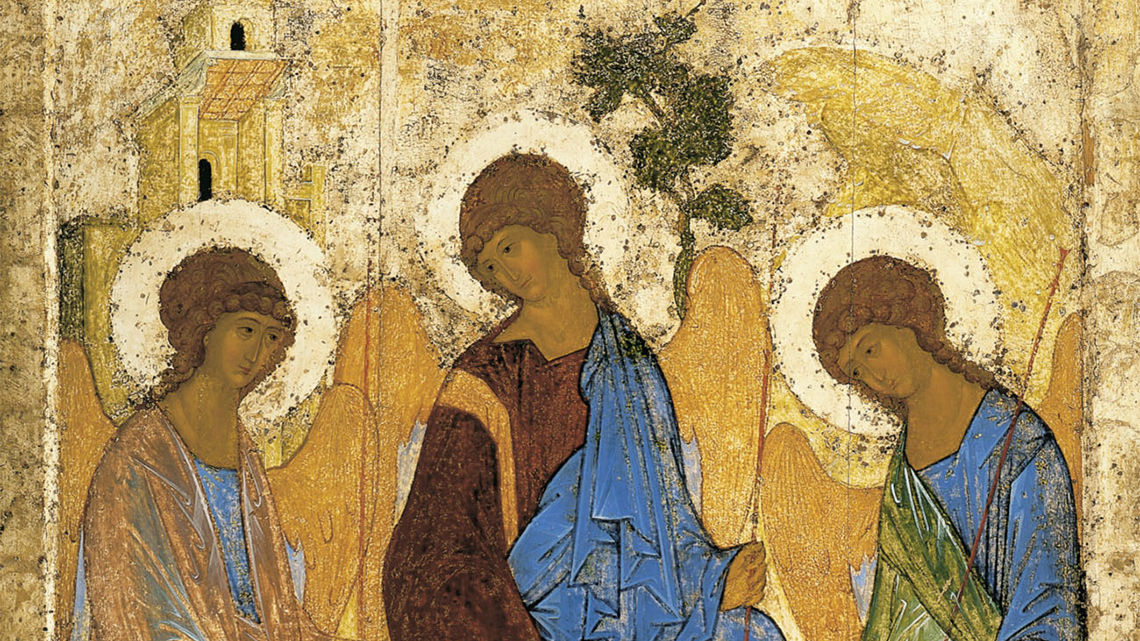
We Dare to Ask – Session Two
God’s covenant with Noah brought his people hope. By the time we hear of the disaster of the Tower of
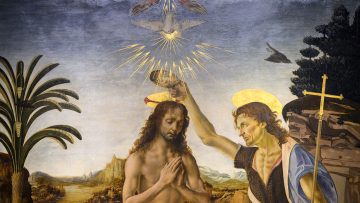
Babel, God’s people have turned away from their Creator once again. God, however, continues to pursue the hearts of his beloved people. He called a man named Abram to gather his family and leave his homeland; to set himself apart from those worshipping pagan gods and he gives him a new name. Abraham found it difficult to surrender to God’s will and he continually asked God for signs. God’s response was to give Abraham a meaningful sign in the form of a covenant. God continues to pursue us today and makes a covenant with us at our Baptism.
O God,
send forth your Holy Spirit
into our hearts that we might perceive,
into our minds that we might remember,
into our souls that we might meditate.
Inspire us to speak with love, holiness,
tenderness and mercy.
Teach, guide and direct our thoughts and senses
from beginning to end.
May your grace help us to see with your eyes
and to act with your love and light in our hearts.
May we be strengthened with wisdom from on high
for the sake and glory of your kingdom.
Through Jesus Christ, our Lord. Amen.
In a period of calm and a space of trust, each one of us is invited to share briefly one thing that has happened in the past week. It could be one thing that has given you cause for concern, something shared during the last time you met as a group or something that has given you cause to celebrate.
In this moment of peace and fellowship, we pray for the good of the group. Each member is invited to offer up any personal intentions. We also pray for the good of the Church, for wisdom in our country and for the common good. Let us also bring to mind the poor, the sick and those who have died.
We join together in praying the Apostles’ Creed
Genesis 12:1-3, 15:1-8
Now the LORD said to Abram, “Go from your country and your kindred and your father’s house to the land that I will show you. And I will make of you a great nation, and I will bless you and make your name great, so that you will be a blessing. I will bless those who bless you, and him who dishonours you I will curse, and in you all the families of the earth shall be blessed.”
After this, the word of the Lord came to Abram in a vision:
“Do not be afraid, Abram. I am your shield; your very great reward.”
But Abram said, “Sovereign Lord, what can you give me since I remain childless and the one who will inherit my estate is Eliezer of Damascus?” And Abram said, “You have given me no children; so a servant in my household will be my heir.” Then the word of the Lord came to him: “This man will not be your heir, but a son who is your own flesh and blood will be your heir.” He took him outside and said, “Look up at the sky and count the stars—if indeed you can count them.” Then he said to him, “So shall your offspring be.” Abram believed the Lord, and he credited it to him as righteousness.
He also said to him, “I am the Lord, who brought you out of Ur of the Chaldeans to give you this land to take possession of it.” But Abram said, “Sovereign Lord, how can I know that I will gain possession of it?”
Genesis 12:1-3, 15:1-8
For many of us, homework assignments used to involve spending considerable time in a library leafing through the card catalogue and searching ‘the stacks’, the maze of shelving holding rows upon rows of books. Now, the Internet offers us a wealth of topical information in a matter of seconds. With research results readily at hand, especially in the new world of AI, analysing the information to uncover deeper meanings, studying the context and learning to probe further are all critical thinking skills that have become ever increasingly important. Rather than taking information at face value, students and others are challenging what they read and hear and are asking important big picture questions seeking out the truth about creation and about themselves.
Interestingly, the task of asking key questions has been a part of the Jewish Passover tradition since long before the time of Christ. Recognising the important role of the parents in forming their children in the faith set down in the Torah, family members would gather around the Seder table and the youngest would ask the four questions. The questions along with the symbolic foods enabled families not just to recall the Exodus story but to put themselves in the story. Together they imagined themselves alongside their ancestors being rescued by God; fleeing from slavery in Egypt so they could worship their loving Lord.
Questions were actually an integral part of the formation of the sacred promises known as covenants that God made with our ancestors. God asked Abraham to uproot his family and leave his pagan homeland without knowing the destination (Gen 12). He promised him land and as many descendants. Yet, time and time again, Abraham questioned God ‘how am I to know?’ (Genesis 15) and as their relationship deepened, he implored God to save the righteous living in Sodom (Genesis 18). Confronted with challenges and overcome with doubt on occasion, Abraham had to learn to rely fully on God, to trust, to grow in faith. Aren’t we still called today to do the same?
Just as parents hope to form in their children a curious, questioning mind to face the challenges of twenty-first century living, we are all offered the opportunity to look afresh at our faith, to explore our faith not just with the aid of new digital resources but together with others in our families and communities. God invites each of us to rekindle a child-like wonder, to turn to God with our questions, to seek out his guidance as we confront the challenges of our earthly journey to our heavenly Father. Most importantly, like the covenant first understood by Abraham, he offers each of us a never-ending relationship at our Baptism. ‘I will be your God and you shall be my people’. He asks us to be a people of faith, trusting that he works for our good.
__________