We Dare to Ask - Session Three. 'But he was wounded for our transgressions; he was crushed for our iniquities; upon him was the chastisement that brought us peace, and with his stripes we are healed' (Isaiah 53:5).


We Dare to Ask – Session Three
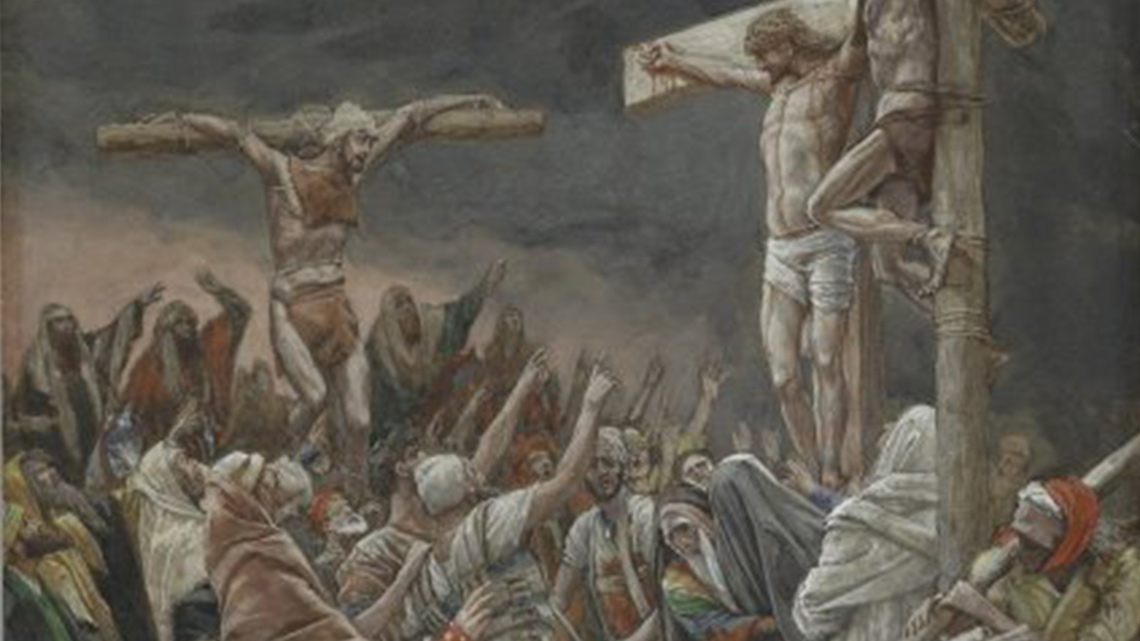
In willing obedience to his Father’s will, Christ lovingly took on human flesh to unjustly suffer for our sins.
Scourged for our iniquities, he sacrificed his life to rescue us and offer us the opportunity to be with him now and forever.
O God,
send forth your Holy Spirit
into our hearts that we might perceive,
into our minds that we might remember,
into our souls that we might meditate.
Inspire us to speak with love, holiness,
tenderness and mercy.
Teach, guide and direct our thoughts and senses
from beginning to end.
May your grace help us to see with your eyes
and to act with your love and light in our hearts.
May we be strengthened with wisdom from on high
for the sake and glory of your kingdom.
Through Jesus Christ, our Lord. Amen.
In a period of calm and a space of trust, each one of us is invited to share briefly one thing that has happened in the past week. It could be one thing that has given you cause for concern, something shared during the last time you met as a group or something that has given you cause to celebrate.
In this moment of peace and fellowship, we pray for the good of the group. Each member is invited to offer up any personal intentions. We also pray for the good of the Church, for wisdom in our country and for the common good. Let us also bring to mind the poor, the sick and those who have died.
We join together in praying the Apostles’ Creed
Romans 6:1-6
What shall we say then? Are we to continue in sin that grace may abound? By no means! How can we who died to sin still live in it? Do you not know that all of us who have been baptised into Christ Jesus were baptised into his death? We were buried therefore with him by baptism into death, in order that, just as Christ was raised from the dead by the glory of the Father, we too might walk in newness of life.
For if we have been united with him in a death like his, we shall certainly be united with him in a resurrection like his. We know that our old self was crucified with him in order that the body of sin might be brought to nothing, so that we would no longer be enslaved to sin. For one who has died has been set free from sin. Now if we have died with Christ, we believe that we will also live with him. We know that Christ, being raised from the dead, will never die again; death no longer has dominion over him. For the death he died he died to sin, once for all, but the life he lives he lives to God. So you also must consider yourselves dead to sin and alive to God in Christ Jesus.
Romans 6:1-6
In recent years, business leaders have been fiercely debating whether they will continue to permit their employees to work from home. Precipitated by Covid, remote working contracts have enabled employees to work from pretty much anywhere, but some business executives are now calling their employees back to the office for at least some portion of each week. While enjoying lower travel costs and less time in transit, employees have grown accustomed to virtual meetings to facilitate discussions amongst work colleagues and line managers. Yet, business leaders contend in-person gatherings are not only better for business but also beneficial for employees. After, all, you can’t turn your camera and sound off when meeting in person.
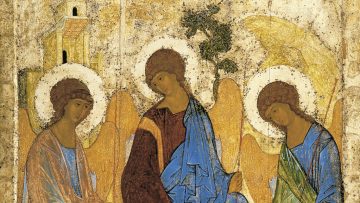
Similarly, in a fashion, God accompanied his people from afar while ‘hiding his face’ throughout the Old
Testament (Deut 31:17). For generations, God quietly spoke to his people through the prophets. While they called God’s people to turn back to him, to live in obedience to his mosaic covenant, the Ten Commandments, they often chose to go their own way, to worship pagan gods. Respecting their free choice and his own aversion to sin, God had to distance himself so they might suffer the pain of his absence even to the point of humiliation and death. Like Moses who died outside of the Promised Land because of idolatry amongst his people, the later prophets, notably Jeremiah and Ezekiel, physically suffered not only for their own sins but also for those of their people. Having been exiled from their homeland and their Temple destroyed, the Israelites realised they needed God’s help to live according to the Commandments and began to hunger for his love, to recognise their sinful ways and ask forgiveness so that they might renew their covenantal relationship and grow closer to God, our loving Father.
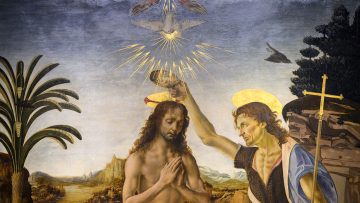
It was not long thereafter that ‘God sent forth his Son’ (Gal 4:4). Christ broke into our world to take on human flesh, to do what we could not do on our own: to make an offering of his own life to rescue us from our sins. Through the Holy Family, he came to us in a body like ours and in doing so he gave a special dignity both to our bodies and to our families. In total openness to the will of the Father, our Blessed Mother brought forth the gift of Christ’s life, body and soul knitted together in human form to image the heart of our heavenly Father. Then, at the moment of his own baptism in the Jordan River, Jesus Christ, the Lord of the Universe, who was sinless, lovingly assumed the sins of all and set about on his mission: to brutally suffer, die and rise to new life so that the pathway to eternal life would be restored for you and for me.
Having taken on our human flesh, the fruit of Christ’s saving work is bestowed on each of us at our Baptism. Water was poured over our heads not as a simply symbolic gesture. It was poured over our heads to unite us to Christ and to transform us. Through the workings of the Holy Spirit, you and I became adopted children of God, our relationship with God, lost by our first parents Adam and Eve, was restored. Like the covenants made with our ancestors, Adam, Noah, Abraham and David, Christ calls us to live in a covenant with him. He invites us each and every day to live our Baptism, to share in his saving work by continually dying to sin, turning away from own sinful, self-centred ways to rise again and again in newness of life in Christ. He gave his life for this. He dearly wants that likeness to grow in each of us so that we may be with him now and for eternity.
__________