Source: vaticannews.va
The document “Caring for Our Common Home” calls for a “responsible and fraternal response to the Triune God”. The ecological question is a theological question: the way we care for Creation reveals and shapes our relationship with God. The deterioration of the environment is alarming and urgent action is needed to ensure the sustainability of the planet. Everything is connected: we must listen to the cry of the Earth and the cry of the poor.
How can humanity respond, from a Christian perspective, to the “ecological and social crisis” into which it has fallen, a crisis that is “short-sighted and suicidal”? This is the question at the heart of the new document of the International Theological Commission (ITC), entitled “Caring for Our Common Home – A Responsible and Fraternal Response to the Triune God”. Published today, 2 September, with the authorisation of Pope Leo XIV, the text is the fruit of reflections carried out between 2022 and 2025.
The starting point is the “threefold transformation” that over the years has led to the loss of the spontaneous perception of nature as God’s creation; to the emergence of an increasingly anthropocentric and predatory vision in the relationship between humanity and Creation; and to the spread of a planetary crisis.
The document is divided into three chapters. The first, “The Common Home, Work of the Triune God”, emphasises the “imprint not only of God, but of the Trinity”, in Creation. This is explored through the teaching of four Doctors of the Church: Augustine of Hippo, Hildegard of Bingen, Bonaventure of Bagnoregio and Thomas Aquinas.
This Trinitarian imprint has the features of sacramentality — that is, it is a sign of “a sacred and hidden reality” that finds its “highest elevation” in the Eucharist — and of interrelationship, since human beings respond to their vocation by correctly developing their relationships with God, with others and with Creation.
This means, the ITC highlights, practising “filial gratuitousness towards God”; “solidarity and mercy towards one’s neighbour”; and “care for the Common Home”. It is a question of balance: “Nothing and no one is a monad,” the document states. “Everything is interrelated” to form “a single community of life”.
The first chapter also develops a dialogue with some scientific and philosophical views of the cosmos, such as immanentism, pantheism and supernaturalism, showing how faith in God the Creator offers something that science cannot provide, even as it “legitimately” investigates the earliest stages of the universe.
While cosmology reflects on how the world came into being, faith explains why: God gives the universe a metaphysical, not merely physical, origin, and freely calls into existence that which would not exist in itself.
The second chapter, “The human being in the Common Home”, opens with a reflection on human beings created in the “image and likeness of God”, providing an opportunity to reaffirm that differences — of ethnicity, gender, culture, social or economic status — in no way imply a hierarchical gradation. Using them to discriminate against or subjugate another departs from God’s plan.
The document then emphasises the importance of the “Sabbath principle”, which, one day a week, allows the Earth to rest in respect of its original rhythms, and humanity to give thanks to the Lord through prayer.
This principle also teaches people to “adopt a disinterested gaze, freed from the appetite to possess, dominate or attack”.
The ITC then summarizes some “very alarming data on ecological deterioration”: the loss of biological diversity, which “is not an exotic luxury” but “a key factor” for food security; air pollution; the deterioration of water quality; war, which “brutally” accelerates the destruction of the environment; and the “extremely serious” repercussions of all this on the poorest, whose natural resources are exploited and who are forced to migrate.
Hence the strong appeal launched by the Commission: in the face of an “unprecedented” ecological crisis, not only scientific and technical solutions are needed — such as substantial changes in systems of production, consumption, transport and energy use — but also and above all “, a change in cultural values”, a genuine ecological conversion in the way people live.
In this regard, the document proposes speaking of “sin against Creation and against the Creator”, a theological formulation that links environmental harm to rejection of God’s plan for creation, while avoiding both purely scientific language, such as “ecocide”, and the dispersal of responsibility.
The present historical moment, in fact, “requires everyone, beginning with those responsible for public life, to take urgent action in favour of the sustainability of the planet and the habitability of the Common Home. This is not only an ethical requirement, but also a theological one”.
The perspective of faith also leads to the rejection of “two unacceptable extremes”: predatory anthropocentrism, which considers humanity the “absolute master of all creation”, and biocentrism or ecocentrism, which absolutises nature.
The Christian proposal, instead, is that of a “situated anthropocentrism” — an expression of Pope Francis taken up by Pope Leo XIV — which places human beings as “stewards and servants of Creation”: they are called both to care responsibly for the Common Home, in accordance with “the mind and legitimate interests of the owner”, who is God; and to cooperate with the divine plan through “generous service”.
This twofold vocation finds its culmination in the Eucharist, an “ecological school” through which “a positive and proactive attitude towards nature” is promoted, that is, far removed from utilitarian or fearfully defensive approaches.
The third chapter, “Care for the Common Home”, offers some practical guidelines, organised around five fundamental relationships of the person.
From the relationship with God comes “Jubilee logic”: based on fraternity and solidarity, which “set an insurmountable limit to greed in the use of the Earth”, as well as on the gratuitousness and humility of those who “do not give in to the impulse to take possession of everything”, this logic leads to social justice.
From the relationship with oneself comes “an ecological spirituality”: faced with the current technocratic paradigm, which imposes frenetic rhythms on work and on personal, family, social and religious life, this spirituality looks to the Benedictine ora et labora to encourage a healthy, attentive and responsible lifestyle, including consumption (“every act of purchasing is a moral act”).
From the relationship with Creation come principles such as reverence; sustainability (“an indispensable criterion that must regulate the system of life and the economic model that sustains it”); listening to the “shattering cry” of the Earth, “tragically linked to the cry of the poor”, who suffer most from “the consequences of the mistreatment of the planet”; respect for life, which allows human beings to use natural resources according to necessity and moderation, rather than through indiscriminate exploitation; asceticism and fasting, a moral response to the overexploitation of resources, especially in wealthy countries; and a differentiated commitment according to the responsibilities of different nations.
Again, from the relationship with one’s neighbour emerge the sacredness of human life — an unconditional and inalienable right that States must protect and promote, including through the rejection of war —; the universal destination of goods — according to Christian Tradition, “private property is not an absolute right” and therefore the Common Home must also be cared for on behalf of future generations —; fraternity, an antidote to violence, injustice and a “false, selfish, atrocious and greedy” individualism; mercy, since without love, human life moves away from God and becomes subhuman; and the preferential option for the poor, who are increasingly exposed to environmental degradation and increasingly deprived of resources to mitigate its effects.
As the fifth and final relationship, the ITC reflects on the contribution to the care of Creation offered by different religions: Judaism, Islam, Hinduism, Buddhism, Confucianism, African religions, and the Indigenous religions of the Americas and Oceania.
Particular attention is given to the elements they have most in common: the interconnectedness of everything that exists, the duty to respect all living beings, and human responsibility.
Therefore, “from the standpoint of the Christian faith, the doors are open to interreligious cooperation in the common task of respectfully caring for all Creation, in the service of the flourishing of life and communion with the Transcendent, who is at the origin and is the foundation of all life”.
In the conclusion of the document, the Commission reaffirms that the ecological question is ultimately a theological question: the way in which Creation is cared for reveals and shapes our relationship with God himself.
Freedom and moral responsibility remain the indispensable foundation of every authentic ecological commitment.
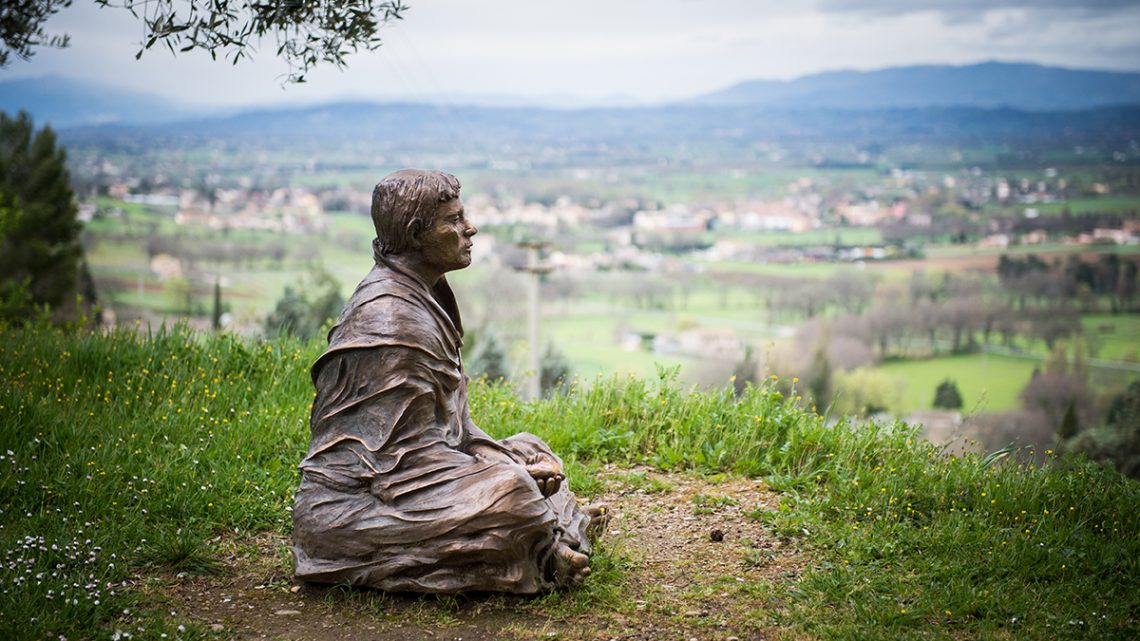
The text therefore calls for an “ecological turning point” that is both cultural and spiritual — following the example of St Francis of Assisi — and concludes on a note of hope: however serious the environmental crisis may be, it does not undermine trust in God, who makes “all things new”.