The Society for the Protection of Ancient Buildings (SPAB) has given its prestigious John Betjeman award to an historic Catholic Church in the Diocese of Plymouth.
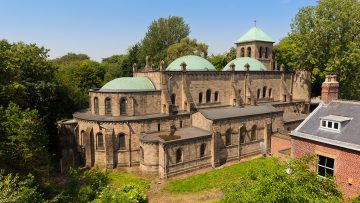
The award, that celebrates excellence in the repair of places of worship of all denominations in England and Wales, was conferred on Our Lady and St Mary Magdalene in Tavistock, a Grade II* listed parish church in Tavistock, Devon.
The project brought together the parish, the Diocese of Plymouth’s Property Department, conservation specialists and contractors, supported by the Catholic Bishops’ Conference of England and Wales.
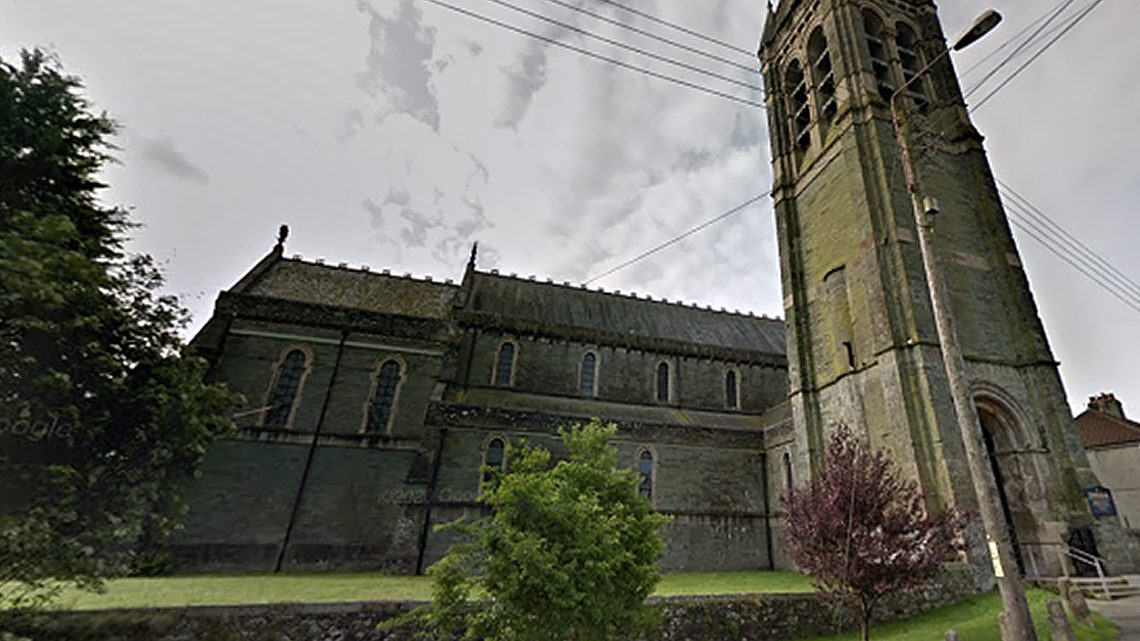
During its quinquennial inspection in 2021, the west Devon church underwent extensive repairs to its 100-foot campanile, or bell tower, with a particular focus on the louvres at the top. In addition, a completely new belfry floor was constructed some 80 feet above the ground.
Our Lady and St Mary Magdalene received £386,564 in grants from the Government’s Covid-time Culture Recovery Fund (2020–22) to finance the repairs.
Welcoming the award, the Right Reverend Nicholas Hudson, Bishop of Plymouth, said:
“A number of our historic churches have received generous grants administered by Historic England, with Our Lady and St Mary Magdalene in Tavistock among them. I’m delighted that the repair of this beautiful church has received national recognition through the prestigious John Betjeman Award. It is a proud moment for our Diocese, as this is the first time that such an award has gone to a Catholic church in England and Wales.
“My sincere thanks go to all those involved, including the parish, the conservation surveyors, specialists and contractors, our Diocesan Property and Finance Departments, as well as the Catholic Bishops’ Conference of England and Wales. Their collaborative work and support in safeguarding this much-loved place of worship for future generations is deeply appreciated.”
Sophie Andreae, Vice Chair of the CBCEW Patrimony Committee, said:
“We are so delighted that the careful repair of this important and historic church has been recognised by the Society for the Protection of Ancient Buildings by the award of the Betjeman Prize to conservation accredited surveyor, Philip Hughes. His attention to detail throughout this project to restore the spire combined with that of his team and the contractors involved has been exemplary.”
The Italianate style church was built by the 8th Duke of Bedford in 1865–67 as a chapel of ease for the workers at the nearby copper mines. Built using the local Hurdwick ashlar, a beautiful grey/green stone used for many of the public buildings in Tavistock at the time, it has a tall campanile on the north side, under which is the main entrance. The second more ornate entrance on the south side was installed for the use of the Dukes of Bedford. The detailing of the church is a mixture of Romanesque arcading and Gothic capitals.
This is the first time the Betjeman Award has gone to a Catholic church in England and Wales.
The following is an extract from our publication Living Stones – A Celebration of Achievement – Grants for Programmes of Major Works 2020–2022:
Our Lady and St Mary Magdalene, Tavistock, was built by the 8th Duke of Bedford in 1865–67 as an Anglican chapel of ease for the workers at the nearby copper mines. The Duke’s architect was Henry Clutton who was employed by the Duke both in Devon and at Woburn. Clutton had converted to Catholicism a decade before and built a significant number of Catholic churches. In the early 20th century, the copper mines declined and between 1918–1936 the church was out of use.
In the early 1950s, a local benefactor bought the church and it opened for Catholic worship in 1952. It is a major landmark on the hill on the edge of the town with the tower and spire visible from a considerable distance.
It is a large church and attached to it is a massive tower and spire. This was in need of major work as internal doors had rotted, internal access was impossible and the leadwork on the louvres had decayed badly requiring extensive replacement. An enormous amount of scaffolding was required, inevitably a major cost way beyond the means of the congregation.
The grant-aided work has seen the whole upper section of the tower and spire restored with stonework repaired and repointed, new timber replacing rotten elements, and new leadwork. Steeple jacks accessed the top of the spire to carry out essential repairs.
Living Stones celebrates the completion of major works to some 39 outstanding historic Catholic buildings in England funded under Historic England’s Grants for Programmes of Major Works from 2020 – 2022. The funding, provided by the government as part of the Culture Recovery Fund, has supported repair projects at a remarkable diversity of Grade I and Grade II* listed Catholic churches and at one historic house, Harvington Hall, near Kidderminster, an important recusant house in the ownership of the Archdiocese of Birmingham and open to the public.
The photo used is from Taking Stock.