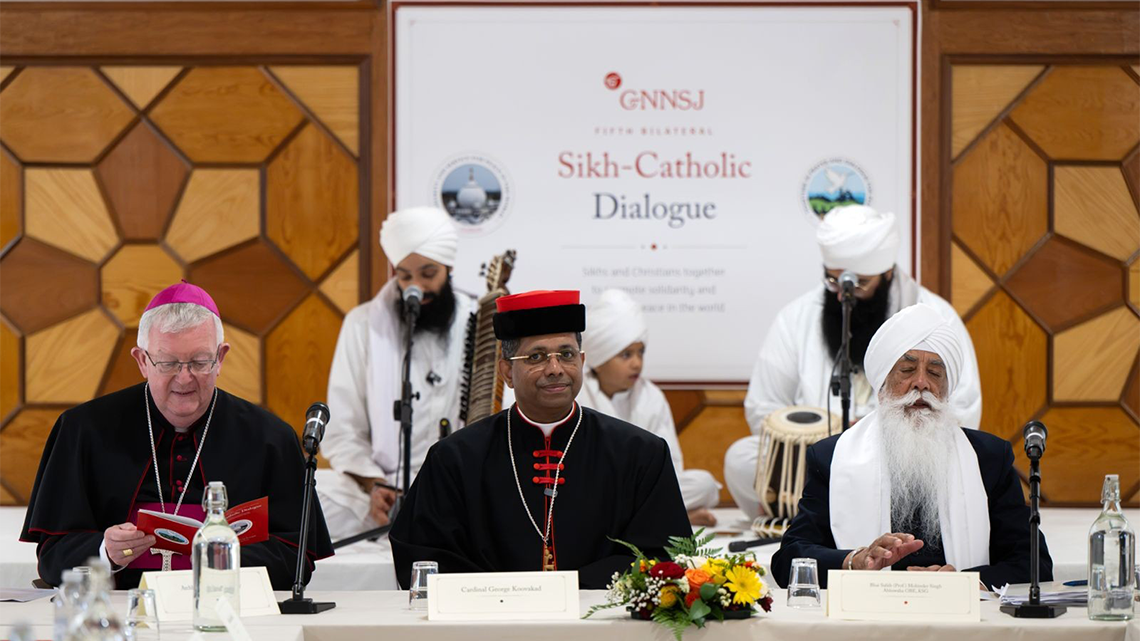
The final dialogue of his first official Church visit to the UK saw Cardinal George Jacob Koovakad spend the day at the Nishkam Centre in Birmingham, which houses the headquarters of Guru Nanak Nishkam Sewak Jatha (GNNSJ), an international Sikh organisation involved in peacebuilding, heritage and conservation projects which operates a number of gurdwaras in the UK, India and Kenya.
The day, titled, ‘Sikhs and Christians together to promote solidarity and service for peace in the world’, marked the fifth bilateral Sikh-Catholic dialogue meeting since 2001.
The concept of ‘Seva’ or selfless service, a fundamental principle of Sikhism which involves serving others without seeking personal recognition, reward or advantage, permeated the day’s discussions.
Rooted in Sikh teachings on equality, compassion and human dignity, Seva is expressed through practical acts of service, including feeding people in need, supporting vulnerable communities and contributing to the welfare of society.
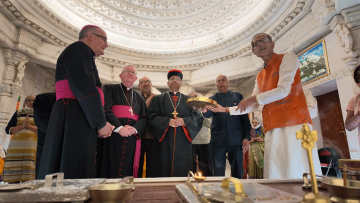
Cardinal Koovakad was met by Bhai Sahib Professor Mhoinder Singh Ahluwalia OBE KSG, Spiritual Leader and Chairperson, GNNSJ, for a private visit to the Nishkam gurdwara, a centre for prayer, scriptural teaching, communal worship and service.
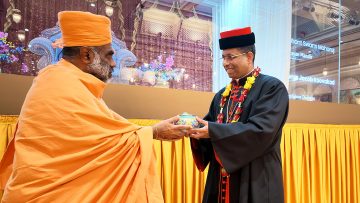
The meeting was opened with a recitation of kirtan, traditional Sikh hymn-singing, and an address by Bhai Sahib Mohinder Ji, spiritual leader of GNNSJ.
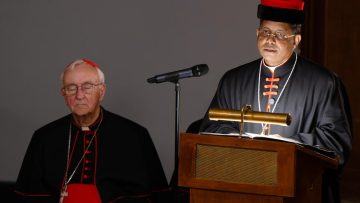
Cardinal Koovakad gave a keynote address in which he reflected on the principles of solidarity and service – concepts which lie at the heart of both Sikh and Christian teachings.
“Promotion of solidarity involves seeking the good of all, respecting the dignity and identity of everyone, irrespective of legitimate differences, and taking moral responsibility for all. Moreover, solidarity as sharing of material, spiritual and human resources with others often entails sacrifices that showcase the best of our humanness, goodness and religiousness.”
“A concrete and a pre-eminent sign of the spirit of seva is seen in the langar, the free kitchen food charity open to all in the Gurdwaras where every man or woman, regardless of their gender and colour, and irrespective of their religion and social status can find a free meal to feed their stomach. For Christianity, service is an indispensable dimension of walking in the footsteps of Jesus. ‘I have set you an example that you should do as I have done for you’ (Jn 13:15). Jesus’ washing the feet of his disciples is a profound act of humility, servanthood, spiritual cleansing and service.”
Exploring the links between the faiths’ interpretations of these two core concepts, the Cardinal concluded: “Solidarity and service are always interconnected… Solidarity and service nurture peace and instil hope.”
The call to serve and act in solidarity is not without its challenges, especially in a world which continues to change at a rapid pace, and the notion of “ego” and overcoming urges to act selfishly arose throughout the day.
Cardinal Koovakad suggested that the words of Saint John Paul II can offer a way to address these challenges:
“Once we truly grasp that we are brothers and sisters in a common humanity, then we can shape our attitudes towards life in the light of the solidarity which makes us one. This is especially true in all that relates to the basic universal project: peace.” (Pope John Paul II, Message for the World Day of Peace, 1 January 1987)
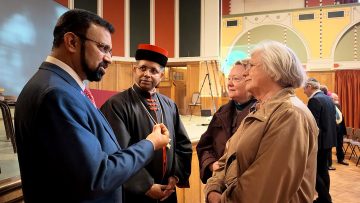
Following the opening addresses, three panel sessions followed which focused on Sikh and Christian visions of service, the promotion of service for the common good and for world peace, and interreligious dialogue as a means for building peace through service.
Panellists included Gurcharan Singh Chandan, Scriptural Reader and Teacher, GNNSJ, Professor Joht Singh Chandan, Professor of Public Health, University of Oxford, Archbishop Bernard Longley, Member of the Dicastery for Interreligious Dialogue, Chair of the Bishops’ Conference Department of Dialogue and Unity, Archbishop of Birmimgham, Dr Manvir Kaur Kalirai, Nishkam Health Trust, Consultant Nephrologist and GP, Dr Jasdev Singh Rai, Director, Sikh Human Rights Group; General Secretary, British Sikh Consultative Forum, Dr Mary McCaughey, Director of Studies and Lecturer in Dogmatic Theology at St Mary’s College, Oscott, Bhai Sahib Professor Mhoinder Singh Ahluwalia OBE KSG, Spiritual Leader and Chairperson, GNNSJ, Sutinder Singh Jabbal, GNNSJ Kenya, and Bishop Patrick McKinney, Co-Chair of the Bishops’ Conference Department for Dialogue and Unity, Lead Catholic Bishop for Interreligious Dialogue, Bishop of Nottingham.
A defining feature of many gurdwaras is Langar, the free community kitchen where meals are prepared and served, usually by volunteers, to anyone who comes, regardless of religion, ethnicity, wealth or social status.
Participants in the day’s meeting were invited to visit the Gurdwara and share in Langar, a practical expression of Sikh teachings on equality, dignity and Seva.
The practice provided a particularly relevant focus for the dialogue, namely that service can bring people together, challenge social divisions and build relationships across communities.
With this final event, Cardinal Koovakad’s visit concluded as it started: with a focus on shared values and calls to continue the path of dialogue to peace. The enriching week of encounter was a powerful demonstration of unity, strength of purpose and a shared pursuit of peace among the UK’s major religions.