Bishop Paul Mason, Lead Bishop for Healthcare, has offered a reflection on this year’s theme for the World Day of the Sick, “The compassion of the Samaritan: loving by bearing another’s pain”.
The World Day of the Sick celebrated every year on 11 February. It was established by St. John Paul II in 1992, and is a privileged moment of prayer, spiritual closeness, and reflection for the entire Church and for civil society, who are all called to recognise the face of Christ in our sick and vulnerable brothers and sisters.
In his message, Bishop Mason reminds us that care for the sick is first and foremost an encounter which can transform both the caregiver and the one being cared for. Reflecting on the Pope’s message for the day, Bishop Mason says:
“Caring for the sick is never limited to treatment or the easing of physical suffering. It is a relationship, an encounter that embraces the whole person. It is also an expression of fraternal love which, as Pope Leo teaches, is never passive but always ‘goes out to meet the other’.”
Dear brothers and sisters in Christ,
For his first World Day of the Sick, Pope Leo XIV has chosen the theme “The compassion of the Samaritan: loving by bearing another’s pain”, a theme that highlights how true care for the sick begins with a loving, personal encounter.
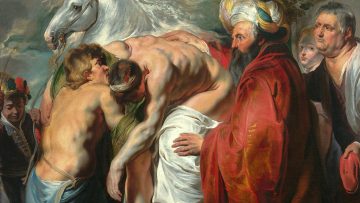
In the parable of the Good Samaritan from the Gospel of Luke, Jesus tells the story of a man who is attacked and left wounded on the roadside. Several passers-by ignore him, but a Samaritan stops, tends the man’s wounds with his own hands, brings him to a place of rest and makes financial provision for him.
In this year’s message for the World Day of the Sick, the Pope reflects on what prompted the Samaritan to act differently from the others and considers the disposition of his heart. He writes: “[…] when the Samaritan saw the wounded man, he did not “pass by”. Instead, he looked upon him with an open and attentive gaze – the very gaze of Jesus – which led him to act with human and compassionate closeness.” When the Samaritan saw the wounded man on the roadside, he did not see just a problem to solve, or a condition to treat. His gaze recognised a person with dignity, created in the image and likeness of God. This recognition opened the way to a genuine encounter, one in which he met the wounded man in the fullness of his suffering, needs, hopes, relationships, and losses.
The story of the Good Samaritan is reflected in the lives of the people who compassionately care for the sick each day. Every year we meet countless such Samaritans in Lourdes. It is no coincidence that the World Day of the Sick coincides with the Feast of Our Lady of Lourdes, whose Shrine is known as a place of miraculous healings of sick and disabled pilgrims. The witness of the volunteers that travel to the Shrine to assist the pilgrims profoundly speaks to this year’s theme. It reminds us that caring for the sick is never limited to treatment or the easing of physical suffering. It is a relationship, an encounter that embraces the whole person. It is also an expression of fraternal love which, as Pope Leo teaches, is never passive but always “goes out to meet the other”.
Such love transforms both the one who receives care and the one who gives it. As Pope Leo mentions, the life of Saint Francis of Assisi offers a powerful example of this. Once repulsed by the sight of leprosy, Francis took the step of embracing and kissing a man affected by the disease. This encounter changed his life forever and led him to a ministry of service among the sick and excluded of the leper colonies. For both St Francis and the leper, that meeting became a source of grace, a deeper understanding of personal worth, and a discovery of the love of Christ present in the other.
On this 34th World Day of the Sick, let us consider how we can look upon the sick and frail in our lives with the gaze of the Good Samaritan. Let us also reflect on our own times of vulnerability, remembering how the compassion of others carried us through moments of illness and need.
Bishop Paul Mason
Lead Bishop for Healthcare
Safeguarding Bishop
Bishop of the Forces