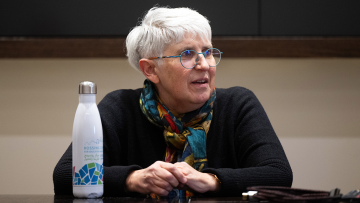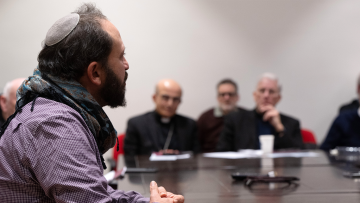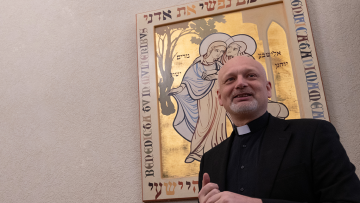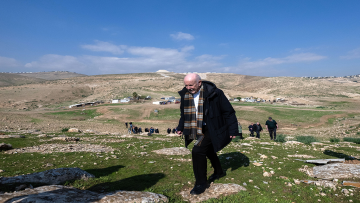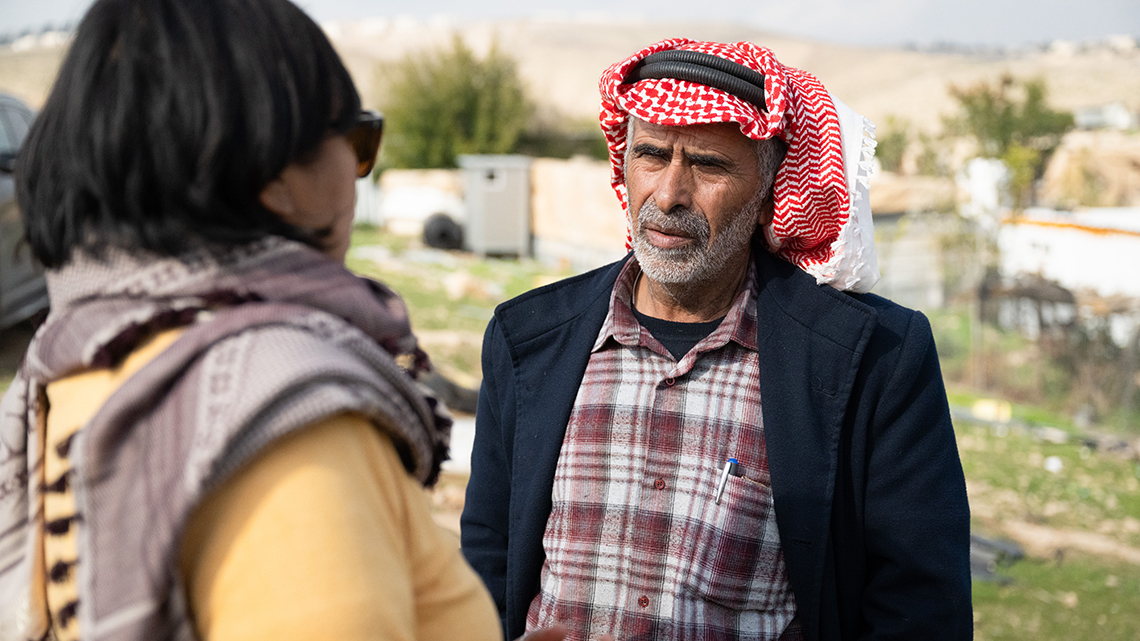
On the first day of the Holy Land Co-ordination of Episcopal Conferences’s visit in support of the Church of the Holy Land, the delegation of bishops visited the Comboni Sisters, who have a long-standing pastoral and humanitarian presence among Bedouin communities. Their ministry is marked by consistency, trust, and quiet service – particularly among women and children.
In this video, Sister Lourdes Garcia MCS talks about how the Comboni Sisters stand alongside clans of the Jahalin Bedouin tribe in the West Bank.
She said:
“They have told us so many times, ‘Sisters, your presence is important, and we feel it’,” says Sister Lourdes. “Even if we cannot directly evangelise to them, I think they value our presence, and they know, as they have said many times, ‘We are one family. All of us, we are children of God’.”
Rapidly expanding Settlements surround the simple-living, nomadic Bedouin tribe and attacks and intimidation are a major problem for the community. However, all the Bedouin want to do is live in peace.
Sr Lourdes explained:
“The Bedouin women have said, ‘Sister, we show our children that we are always smiling and that we are at peace… we don’t have another option. We are afraid during the night, but the next day, it has to be different for us. I mean, to live like that in joyful way, it means that for our children, they will receive this.’ So this is amazing because when I heard them to say that, I saw it was true. You can see all the time they are smiling. They said, ‘We don’t have another option. We cannot suffer all the time.’… This is the resilience that they have.”
A local Bedouin leader, Abu Suleiman, who coordinates a Bedouin organisation called Silver Tent, also gave a brief message to people in the UK.
He said:
“My message to our friends in your country is to look after the Bedouin. The British, when they were here in Palestine, or in Jordan, they looked after the Bedouin – they helped the Bedouin in the Middle East.”